
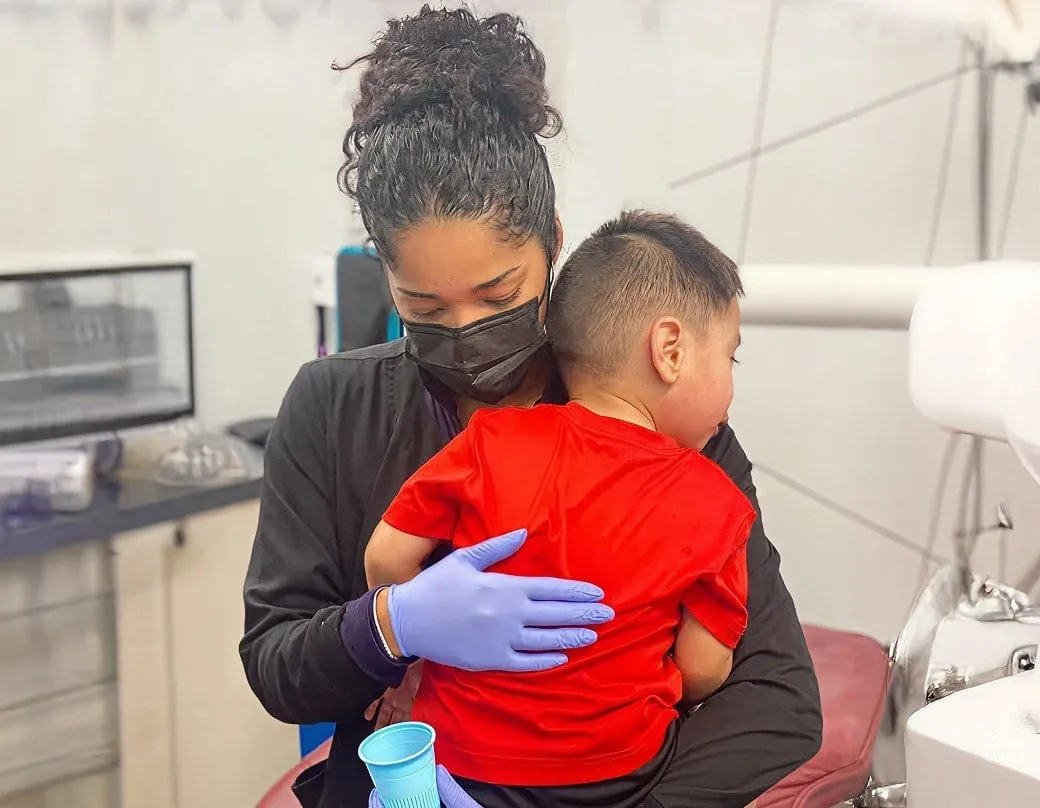
To handle a dental emergency for your child at home, stay calm, assess the injury, control bleeding with gauze, preserve any knocked-out permanent teeth in milk, and contact your pediatric smile expert right away.
What Counts as a Dental Emergency in Children?
A dental emergency in kids includes any situation involving significant oral trauma, persistent bleeding, severe swelling, or a permanent tooth that's been knocked completely out. Knocked-out permanent teeth, broken teeth, uncontrolled bleeding from the mouth, and intense toothaches all qualify as true emergencies that need prompt action. According to the American Academy of Pediatric Dentistry, these situations require quick response to prevent lasting damage.
Not every dental concern requires a midnight phone call. A small chip with no soreness, a wiggly baby tooth, or mild sensitivity can usually wait for a scheduled appt. True emergencies involve significant trauma, persistent bleeding, severe swelling, or a permanent tooth that's been knocked completely out.
Sports injuries are the biggest culprit when it comes to kids and dental emergencies. Falls during play come in a close second. Biting down on hard objects like ice or candy and complications from untreated cavities that suddenly flare up round out the list. For families in [City], active kids who play sports year-round are simply more prone to these incidents.
Here's the most important thing to remember: stay calm. Your child will mirror your reaction. If you panic, they'll panic. Take a breath, assess the situation, and follow the steps below. Your composed response makes everything easier for everyone.
One key distinction every parent should know: baby teeth and permanent teeth require different responses. A knocked-out baby tooth should never be reinserted, while a knocked-out permanent tooth can often be saved if you act quickly. Knowing the difference could save your child years of dental complications. Our board-certified pediatric dentists (diplomates of the American Board of Pediatric Dentistry) walk [City] parents through these situations every week.
Step-by-Step: How to Handle Common Dental Emergencies at Home
When a dental emergency happens, having a clear action plan makes all the difference. The team at ICON Pediatric Dentistry & Orthodontics recommends keeping these steps posted on your fridge for quick reference.
What Should I Do for a Knocked-Out Permanent Tooth?
This is the most time-sensitive emergency. You have roughly 30 minutes for the best chance of saving the tooth.
Find the tooth and pick it up by the crown (the white chewing surface), never the root. If it's dirty, rinse it gently with milk or saline, but don't scrub it or use soap. Try to reinsert the tooth into the socket and have your child bite down gently on gauze to hold it in place. If reinsertion isn't possible, drop the tooth into a small container of cold milk (not water) and get to your pediatric smile expert or an emergency dental clinic right away.
Why milk? The tooth's root contains delicate cells that keep it alive. Touching the root, letting it dry out, or storing it in water can damage these cells permanently.
What Should I Do for a Knocked-Out Baby Tooth?
Different rules apply here. Do NOT try to put a baby tooth back in.
- Have your child bite down on clean gauze to control bleeding
- Apply gentle pressure for 10 to 15 minutes
- Use a cold compress on the outside of the cheek to reduce swelling
- Save the tooth to show your smile expert
Reinserting a baby tooth can damage the permanent tooth developing underneath. Your smile expert will want to examine the area and may recommend a space maintainer if the tooth was lost early.
How Do I Handle a Chipped or Broken Tooth?
Start by rinsing your child's mouth gently with warm water and applying a cold compress to the face near the injured area. Save any tooth fragments you can find and place them in milk. If there's bleeding, apply gentle pressure with gauze. Give age-appropriate relief medication if needed, then contact your pediatric smile expert to schedule an evaluation.
Even small chips should be examined. What looks minor on the surface might involve deeper damage to the tooth's structure.
How Do I Treat My Child's Toothache at Home?
- Rinse your child's mouth with warm salt water (1/2 teaspoon salt in 8 ounces of water)
- Gently floss around the affected tooth to remove any trapped food
- Give child-safe relief like ibuprofen or acetaminophen at the appropriate dose
- Apply a cold compress to the outside of the cheek
- Never place aspirin directly on the gums, as this can burn the tissue
Toothaches usually mean something's going on underneath, like a cavity or infection. Schedule an appt as soon as possible.
What If an Object Is Stuck Between My Child's Teeth?
Try to remove it gently with dental floss, guiding the floss carefully to avoid cutting the gums. Sharp objects like pins, toothpicks, or tweezers should never go near your child's mouth for this purpose. If floss doesn't work, call your pediatric smile expert for help. Forcing a stuck object can push it deeper or injure the gum tissue.
Why Knowing Pediatric Dental First Aid Matters
How Can Quick Action Save My Child's Tooth?
Knowing pediatric dental first aid matters because quick thinking during a dental emergency can genuinely save your child's tooth. According to the American Association of Endodontists, a knocked-out permanent tooth that's reimplanted within 30 minutes has a much higher survival rate than one that sits in a pocket or purse for an hour.
Beyond saving teeth, proper first aid reduces your child's anxiety during a scary moment. Kids take cues from their parents. When you know exactly what to do, you project confidence that helps calm them down. That matters more than most people realize, especially with younger kids who can't fully understand what's happening.
Acting fast also prevents complications. Controlling bleeding, keeping a wound clean, and avoiding further damage all reduce the risk of infection before you can get professional care. For [City] families, knowing these steps means you're never caught off guard during a weekend soccer game or a late-night tumble off the bed.
Does Dental First Aid Save Money Too?
There's a real financial benefit as well. Preserving tooth structure through proper first aid often means simpler, less expensive treatment down the line. A tooth that's saved doesn't need to be replaced later with an implant or bridge, which can cost thousands of dollars over time.
Going from uncertainty to confidence helps everyone in the family handle stressful situations better. When you've practiced these steps or at least read through them once, your instincts kick in when it counts. That calm, informed response can spare your child both physical tenderness and emotional stress.
Dental Emergency vs. Non-Emergency: When to Call Your Pediatric Smile Expert
A dental emergency is any oral injury or condition that requires immediate professional attention to save a tooth, stop persistent bleeding, or address severe infection. Not every dental concern qualifies, so here's how to tell the difference.
Knocked-out permanent teeth, uncontrolled bleeding, and jaw injuries need same-day care. Urgent concerns like large chips or moderate toothaches should be seen within 24 to 48 hours. Small chips and loose baby teeth can wait for a regular appt.
| Situation | Urgency Level | What to Do |
|---|---|---|
| Knocked-out permanent tooth | Emergency | Act immediately; see smile expert within 30 minutes |
| Jaw injury or can't close mouth | Emergency | Go to ER or call smile expert immediately |
| Uncontrolled bleeding (won't stop after 10 min) | Emergency | Apply pressure; seek immediate care |
| Severe facial swelling | Emergency | Could indicate infection; call smile expert or go to ER |
| Knocked-out baby tooth | Urgent | Control bleeding; call smile expert same day |
| Large chip exposing pink tissue | Urgent | Call smile expert; schedule same-day if possible |
| Moderate toothache | Urgent | Manage tenderness; call for appt within 24-48 hours |
| Small chip, no soreness | Can Wait | Schedule regular appt |
| Loose baby tooth (age-appropriate) | Can Wait | Monitor; mention at next visit |
| Minor sensitivity | Can Wait | Note symptoms; discuss at next checkup |
When to choose the ER over your smile expert
Go to the emergency room if your child has a head injury along with the dental trauma, if there's difficulty breathing or swallowing, if you suspect a broken jaw, or if severe bleeding won't stop with pressure. The ER can stabilize your child and address life-threatening concerns, then refer you to a pediatric smile expert for tooth-specific treatment afterward.
What to Expect: Costs of Pediatric Emergency Dental Care
Treatment costs for pediatric dental emergencies vary widely depending on what happened and what's needed. Here are some general benchmarks for [City] families to keep in mind.
Simple treatments like bonding a small chip typically range from $100 to $400, depending on the extent of the damage. More involved procedures like root canals on permanent teeth can run $500 to $1,000 or more, while extractions followed by space maintainers fall somewhere in between. Reimplanting a knocked-out tooth involves follow-up visits to monitor healing, which adds to the total.
The good news: most dental insurance plans cover emergency visits for kids. Check your policy's specifics, but emergency care is typically considered a covered benefit. Call your insurance provider if you're unsure about your coverage.
Keep this in mind: delaying care almost always costs more in the long run. A small crack that could have been bonded might turn into a tooth that needs a crown or extraction. An infection that could have been treated with antibiotics and a filling might require a root canal.
Many pediatric dental practices, including ICON Pediatric Dentistry & Orthodontics in [City], offer payment plans and financing options to help families manage unexpected costs. Don't let cost concerns prevent you from seeking timely care. Ask about your options.
The first aid you provide at home costs nothing and can mean the difference between a simple bonding and a full crown.
Building Your Child's Dental Emergency Kit at Home
A home dental emergency kit should include sterile gauze, a tooth storage container, child-safe relief medication, a cold pack, a flashlight, and your pediatric smile expert's emergency number. You don't need anything fancy. A ziplock bag and a carton of milk go a long way. Just keep a few items stored together where you can find them quickly.
Essential items for your kit
- Sterile gauze pads (for controlling bleeding and protecting wounds)
- A small container with a tight-fitting lid (for storing a knocked-out tooth)
- Child-safe relief medication (ibuprofen or acetaminophen in age-appropriate doses)
- Instant cold pack (reduces swelling and numbs the area)
- Small flashlight (to see inside your child's mouth clearly)
- Your pediatric smile expert's emergency contact number
Families with active kids in [City] should also invest in custom mouthguards. The American Academy of Pediatric Dentistry recommends mouthguards as one of the most effective ways to prevent dental injuries during sports. A custom-fitted guard from your smile expert offers better protection than store-bought options. Ask the team at ICON Pediatric Dentistry & Orthodontics about custom options.
Make sure every adult who cares for your kids (babysitters, grandparents, coaches) knows where the kit is and understands basic dental first aid steps.
Frequently Asked Questions About Children's Dental Emergencies
Should I put a knocked-out baby tooth back in?
No. Never reinsert a baby tooth. The American Academy of Pediatric Dentistry advises against it because the roots sit very close to the developing permanent teeth underneath. Pushing a baby tooth back into the socket can damage the permanent tooth waiting to come in. Control any bleeding with gauze and call your pediatric smile expert for guidance.
How long do I have to save a knocked-out permanent tooth?
The best outcomes happen when the tooth is reimplanted within 30 minutes. After an hour outside the mouth, the chances of successful reattachment drop significantly. Keep the tooth moist in milk, handle it only by the crown, and get to a smile expert as quickly as possible.
Can I give my child ibuprofen for a toothache?
Yes, ibuprofen is generally safe for kids' dental soreness when given at the appropriate dose for their age and weight. Follow the package instructions carefully. Acetaminophen is another option. Never give aspirin to kids or place any medication directly on the gums, as this can cause chemical burns.
What if my child's tooth is pushed up into the gum?
This is called an intruded tooth, and it requires immediate professional attention. Don't try to pull the tooth back down yourself. The tooth may have damaged the bone, root, or developing permanent tooth, so call your pediatric smile expert right away or head to an emergency dental clinic. [City] families can reach our team for same-day guidance on these situations.
When should I take my child to the ER instead of the smile expert?
Head to the emergency room if your child has injuries beyond the teeth, especially head trauma, or severe facial swelling affecting breathing or swallowing. Go to the ER if you suspect a broken jaw (they can't open or close their mouth normally), or if heavy bleeding won't stop despite 15 to 20 minutes of firm pressure. The ER handles medical stabilization; your smile expert handles the tooth treatment afterward.