
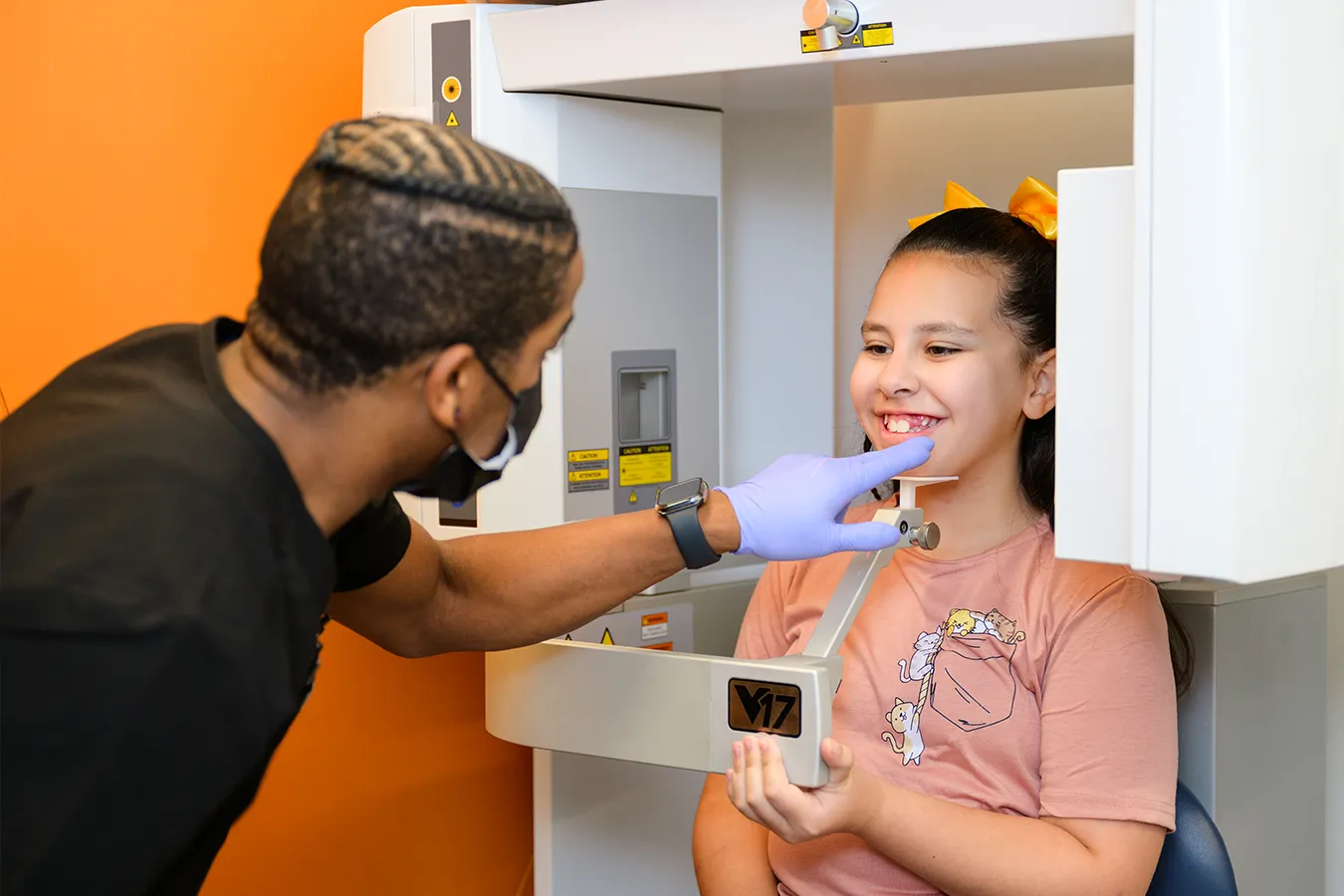
The main difference between a pediatric dentist and a general dentist for kids comes down to specialized training. Pediatric dentists complete two to three additional years of residency focused on kids' oral health, child psychology, and developmental care after dental school, while general dentists train to treat all ages without that pediatric-specific depth.
Both types of dentists earn either a DDS (Doctor of Dental Surgery) or DMD (Doctor of Medicine in Dentistry) degree. General dentists complete four years of dental school and can treat families of all ages right away. Pediatric dentists go further. They pursue specialty credentials covering child psychology, behavior management, and how teeth and jaws develop from infancy through adolescence.
This extra training matters. According to the American Academy of Pediatric Dentistry (AAPD), pediatric dentists learn techniques for managing dental anxiety, treating childhood oral diseases, and providing safe sedation when needed. Board certification by the American Board of Pediatric Dentistry (ABPD) signals that a pediatric dentist has demonstrated additional expertise through rigorous examination.
Think of it this way. A general dentist is like a family medicine doctor, while a pediatric dentist is like a pediatrician. Both are qualified professionals, but one has specialized training for treating younger families. At practices like Smiles In Progress, that distinction shapes everything from the practice environment to the way your child's dentist communicates during a visit.
How Pediatric Dental Training and Practice Work Differently
General dentists complete four years of dental school and can begin practicing immediately after graduation. They learn to treat many dental conditions across all age groups. Many general dentists do excellent work with kids, but their training covers the full spectrum of adult and pediatric care.
Pediatric dentists take a different path. After earning their DDS or DMD, they complete a two to three year CODA-accredited residency program. During this time, they focus on:
- Sedation dentistry and anesthesia for young families
- Caring for kids with special healthcare needs
- Childhood oral diseases and trauma management
- How the face and jaws grow and change over time
- Behavior guidance techniques built specifically for kids
The practice environment reflects this specialized focus too. Pediatric dental practices are designed with kids in mind. You'll often find smaller dental chairs, kid-sized instruments, colorful decor, and waiting rooms with toys and games. These details aren't just for fun. They help young families feel comfortable and reduce anxiety before the appointment even starts.
Pediatric dentists also use age-appropriate communication. Explaining procedures in ways kids can understand, using distraction techniques, and knowing how to work with kids who may be nervous or uncooperative, these skills develop over years of focused training. Hands-on practice with young families during residency is what builds that confidence and expertise.
Benefits of Choosing a Pediatric Dentist for Your Child
Choosing a pediatric dentist offers several advantages for your family. Here's a quick snapshot of the key benefits before we break them down:
- Specialized training in managing dental anxiety in kids
- Deep knowledge of jaw growth, tooth eruption, and developmental changes
- Advanced pediatric sedation skills for safer, more comfortable care
- Experience working with kids who have special healthcare needs
- Early orthodontic screening that catches concerns before they grow
Anxiety Management Built for Kids
Pediatric dentists complete extensive training in child behavior guidance techniques, including tell-show-do and positive reinforcement. Kids don't always love going to the dentist, and that's completely normal. Years of residency training give pediatric dentists tools that general dentists simply don't receive in the same depth. The goal is turning a potentially scary experience into a positive one.
Growth and Development Expertise
Your child's mouth changes rapidly. A pediatric dentist monitors jaw growth, tooth eruption patterns, and developmental changes at every visit. Spotting potential concerns early, before they become bigger ones, helps families stay ahead of dental needs rather than reacting to them later.
Safe Sedation and Special Needs Care
Some kids need extra help staying calm during treatment. Pediatric dentists receive specialized training in sedation dentistry for young families, making procedures safer and more comfortable. This training goes well beyond what most general dentists receive in dental school. Kids with autism, Down syndrome, cerebral palsy, or other conditions also benefit from the adaptive techniques pediatric dentists learn during their ABPD-track residency.
Early Orthodontic Screening
The American Association of Orthodontists (AAO) recommends kids get an orthodontic evaluation by age 7. Pediatric dentists work closely with orthodontists and can identify early signs of bite concerns, crowding, or jaw alignment needs. Some practices, like Smiles In Progress, house both pediatric dentists and orthodontists under one roof, so your child receives coordinated care without bouncing between locations.
Pediatric Dentist vs General Dentist: Side-by-Side Comparison
Understanding the differences between these two types of dentists can help you make the right choice for your family. Here's how they compare:
| Factor | General Dentist | Pediatric Dentist |
|---|---|---|
| Education | 4 years dental school (DDS/DMD) | 4 years dental school + 2-3 year CODA-accredited pediatric residency |
| Age Range Served | All ages (kids through seniors) | Infants, kids, teens, and special needs families |
| Practice Environment | Standard clinical setting | Child-friendly spaces with smaller equipment and calming decor |
| Behavior Training | Basic | Extensive training in child psychology and behavior management |
| Sedation Expertise | Varies by practice | Specialized pediatric sedation training |
| Special Needs Care | Limited training | Dedicated residency training in adaptive techniques |
| Board Certification | General practice | ABPD certification available for pediatric specialists |
Both types of dentists can provide quality care. The real question is which one best fits your child's needs. For kids with dental anxiety, behavioral challenges, or special healthcare needs, a pediatric specialist often makes the biggest difference.
General dentists may be a good fit for older kids who are comfortable in a dental setting and don't require specialized behavior management. Many families also appreciate the convenience of having everyone see the same dentist. There's no single right answer. It depends on your child's temperament, age, and specific dental needs.
A helpful rule of thumb: if your child is under seven, has any anxiety around dental visits, or has special healthcare needs, starting with a pediatric dentist gives you the strongest foundation.
Cost Considerations: Pediatric Dentist vs General Dentist
Pediatric dentist visits typically cost more than general dentist visits. The difference reflects specialized training, child-specific equipment, and the extra time often needed for younger families. Most families find the added value well worth the investment.
Here's what families should know about costs:
- Insurance coverage: Most dental insurance plans cover pediatric dental visits at the same rate as general dentist visits. Many plans include pediatric dental benefits for kids under 19 as part of essential health benefits. Check your specific plan for details on copays and covered services.
- Preventive value: Investing in specialized pediatric care early can help prevent costly treatments down the road. Catching concerns early often means simpler, less expensive solutions.
- Budget that works: Many pediatric practices understand that families have budgets to consider. Flexible payment options can make specialized care accessible, so cost doesn't have to be the deciding factor.
A pediatric dentist who helps your child develop positive associations with dental care sets them up for better oral health habits as adults. Kids who feel safe and comfortable at the dentist are far more likely to keep those habits going on their own.
When Should Your Child See a Pediatric Dentist?
The AAPD recommends that kids have their first dental visit by age one or within six months of their first tooth erupting, whichever comes first. This "first birthday, first visit" guideline helps establish a dental home early.
Your child may benefit most from a pediatric dentist if they:
- Are under age three and need their first dental exam
- Experience dental anxiety or have had negative dental experiences
- Have behavioral challenges that make sitting still difficult
- Have special healthcare needs requiring adaptive care
- Need sedation for dental procedures
- Would benefit from a child-focused environment with smaller equipment and calming decor
Pediatric dentists typically see families from infancy through adolescence, usually around age 18. After that, most young adults transition to a general dentist. The AAO also recommends an orthodontic screening by age 7, and pediatric dentists are well-positioned to identify when that evaluation makes sense.
Frequently Asked Questions About Pediatric vs General Dentists
Can a general dentist treat my child?
Yes, general dentists can treat kids and many do so regularly. However, they don't have the specialized residency training that pediatric dentists complete. For kids with anxiety, behavioral challenges, or special needs, a pediatric specialist often provides a better experience.
At what age should a child stop seeing a pediatric dentist?
Most pediatric dentists see families through age 18, though some continue treating young adults into their early twenties. The transition to a general dentist typically happens after high school graduation.
Is a pediatric dentist the same as a family dentist?
No. A family dentist is a general dentist who treats families of all ages, from kids to grandparents. A pediatric dentist is a specialist who completed additional CODA-accredited residency training specifically for treating infants, kids, teens, and special needs families. The training depth and clinical focus are quite different.
How do I know if a pediatric dentist is board certified?
You can verify board certification through the American Board of Pediatric Dentistry (ABPD) website. Board-certified pediatric dentists holding DDS or DMD degrees have passed rigorous written and oral examinations demonstrating their expertise in kids' oral health.
Does my child need a pediatric dentist for braces?
Braces and orthodontic treatment are provided by orthodontists, not pediatric dentists. Pediatric dentists play an important role in identifying early orthodontic needs and referring families for evaluation at the right time. Some practices, like Smiles In Progress, house both pediatric dentists and orthodontists, allowing them to coordinate your child's care in one location.
What's the difference between a pedodontist and a pediatric dentist?
They're the same thing. "Pedodontist" is an older term for a pediatric dentist. Both refer to a dental specialist trained to care for infants, kids, and adolescents. If you see either title, you're looking at someone with the same advanced residency training and ABPD certification pathway.