Dental Exams & Cleanings
The health of your child’s teeth and mouth is very important to the well-being of his or her entire body, and while routine brushing and flossing at home is necessary to keep your child’s smile looking its best, visiting the dentist for a comprehensive exam and cleaning is essential. The American Dental Association recommends that your child visit the dentist every six months to ensure his or her teeth stay healthy and smile stays beautiful.
By routinely seeing the dentist for exams and cleanings, your child can:
- Prevent tooth decay, gum disease, and bad breath
- Avoid costly and extensive dental procedures
- Have white teeth by reducing staining from food and drinks
- Shorten the time spent in the dentist’s office
- Have a smile that will last a lifetime
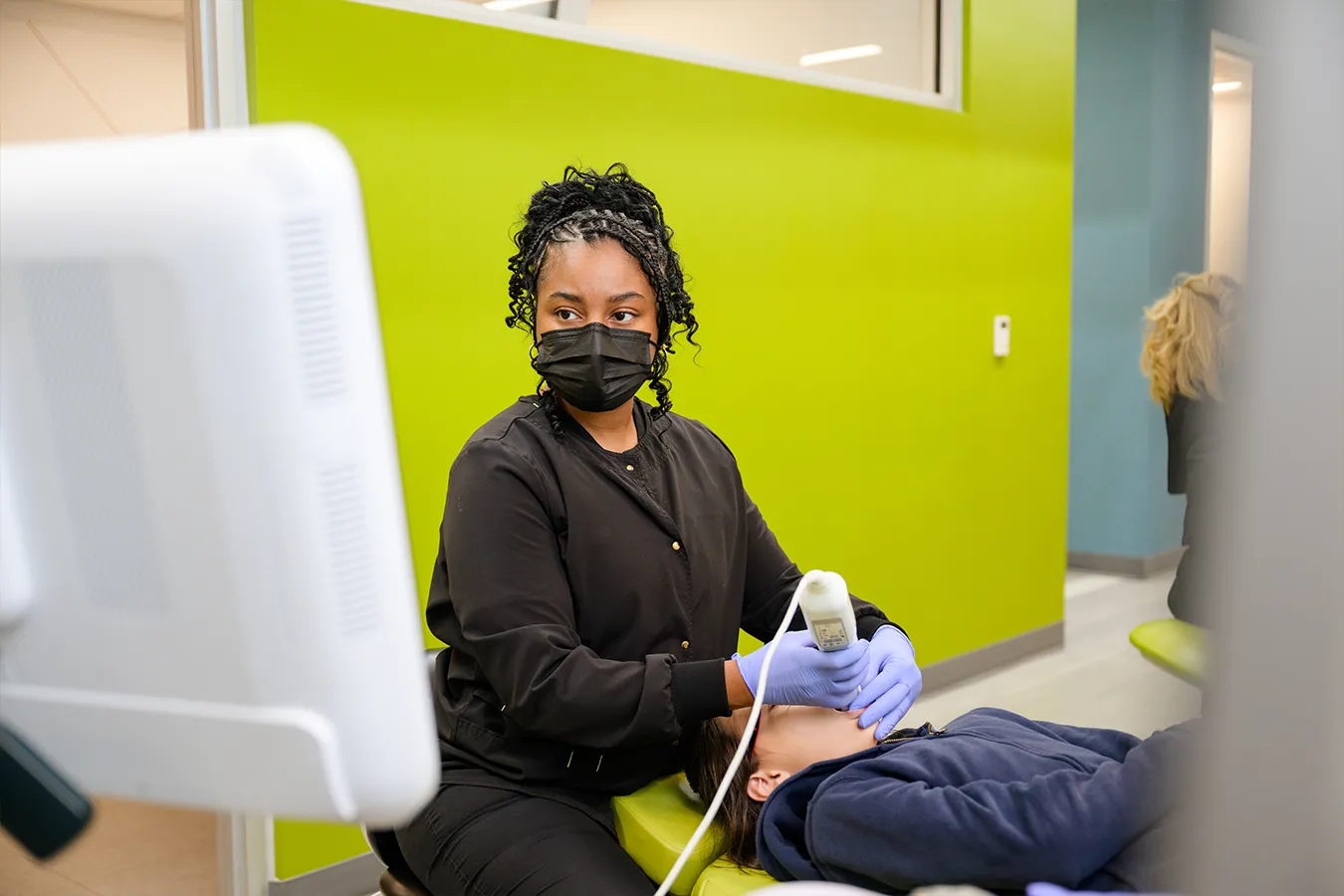
During your child’s exam, your dentist will thoroughly examine your child’s teeth and gums for signs of tooth decay, gum disease, and other health problems. The dentist may also want to take X-rays to see what is happening beneath the surface of the teeth and gums. Whether these X-rays are traditional or digital, the images provided will help the dentist discover dental issues not visible to the naked eye.
professional cleanings
The dental hygienist will begin your child’s cleaning by exploring the surface of the teeth to determine if there are any cavities and to examine the quality of existing fillings. The dental hygienist will then perform a periodontal exam to make sure your child’s gums adhere tightly to the teeth, and no periodontal disease or bone loss is present.
Next, the hygienist will carefully clean your child’s teeth with a variety of tools to remove any hard mineral buildup (tartar) from the teeth. Then, the hygienist will floss your child’s teeth, use a polishing compound, and apply fluoride. Cleanings usually aren’t painful, but if your child has any anxiety about the dental exam, be sure to let the hygienist know. They may offer several sedation options to ensure your child’s comfort. If the dentist or hygienist finds tooth decay or gum disease, they will talk to you about changing your child’s brushing or flossing habits. In severe cases, they may recommend antibiotics or other dental treatments. If your child’s teeth and gums appear to be healthy, the dentist will probably recommend that your child continue his or her brushing and flossing routine as usual.
Dental Care For Your Baby
Are you prepared for the arrival of your baby’s first tooth? Follow these guidelines and your child will be on the way to a lifetime of healthy smiles! Our team is always here for you if you have any questions or concerns about your baby’s smile development.
Even before your baby’s first tooth appears, the gums can benefit from your careful attention. After breast- or bottle-feeding, wrap one finger with a clean, damp washcloth or piece of gauze and gently rub it across your baby’s gum tissue. This practice both clears your little one’s mouth of any fragments of food and begins the process for building good daily oral care habits.
When that first tooth makes an entrance, it’s time to upgrade to a baby toothbrush. There are usually two options: a long-handled toothbrush that you and your baby can hold at the same time, and a finger-puppet-like brush that fits over the tip of your pointer finger. In each case, the bristles are soft and few.
At this stage, toothpaste isn’t necessary; just dip the brush in water before brushing. If your little one doesn’t react well to the introduction of a toothbrush, don’t give up. Switch back to a damp washcloth for a few months and try the toothbrush again. During the teething process, your child will want to chew on just about anything, and a baby toothbrush with a teether can become a favorite toy during this period.
When a few more teeth appear, you can start using toothpaste with your child’s brush. At this stage, use only a tiny amount of fluoridated toothpaste (the size of a grain of rice). From the beginning, have your little one practice spitting the toothpaste out after brushing, which should not be swallowed at any age.
avoiding cavities
Don’t give your baby any sort of sweetened liquids such as flavored drinks or soda. Even the sugars present in fruit juice, formula, and milk (this goes for breast milk as well) can cause decay, so regular teeth and gum cleaning is vital. Also, make sure your baby never goes to bed with a bottle; sugary liquids in prolonged contact with teeth are a guarantee for early-childhood decay, also called baby-bottle caries.
your baby’s first visit with us
It’s recommended that you bring your baby in for a visit within six months of the first tooth’s eruption — usually around his or her first birthday. Since decay can occur in even the smallest of teeth, the earlier your baby visits us, the more likely he or she is to avoid problems. We’ll look for any signs of early problems with your baby’s oral heath, and check in with you about the best way to care for your little one’s teeth. Remember that preparing for each dental visit with a positive attitude goes a long way toward making your child comfortable with regular checkups.
As part of the natural learning process, little ones are expert mimics, and you can take advantage of this talent. Brush and floss daily while your child is watching, and he or she will intuit at an early age the importance of your good habits. As soon as your child shows interest, offer a toothbrush of his or her own and encourage your toddler to “brush” with you. (You’ll find toothbrushes with chunky, short handles that are easy to grip.) Most children don’t have the dexterity necessary to thoroughly clean their own teeth until they’re about six or seven, so you’ll have to do that part of the job. Try different tactics to make brushing fun: flavored toothpaste, a toothbrush with a favorite character on it, or singing songs about brushing. The primary goal is to instill healthy oral habits at an early age to set your child up for a lifetime of healthy, cavity-free teeth!
Sedation Dentistry
Imagine your child undergoing a complex dental treatment like a root canal, extraction, or oral surgery. When treatment is complete, your child will have no recollection of the time it took, the pain, the noise, or the discomfort. We are pleased to offer your child the option of comfortable, safe, and effective sedation dentistry. Our pediatric patients who benefit from sedation dentistry typically have:
- A fear or anxiety of being at the dentist
- A hard time sitting still for long periods of time
- A hard time getting (and staying) numb from anesthetics
Sedation dentistry allows your pediatric dentist to provide a variety of dental treatments safely and comfortably for children who experience anxiety when visiting the dentist. There are several benefits to sedation dentistry, including:
- No memory of undergoing the procedure
- No sense of time while under sedation
- No sense of smell or sound
- No fear or anxiety during treatment
Levels of sedation offered
We prioritize your child’s comfort and well-being during every dental procedure. To ensure a stress-free experience, we offer a range of conscious sedation options designed to keep your child relaxed and at ease. For mild and moderate sedation, we provide inhalation sedation (nitrous oxide), commonly referred to as “happy gas,” which helps reduce anxiety while allowing your child to remain fully conscious and responsive.
For cases that require a stronger level of sedation, we carefully administer a combination of Valium and nitrous oxide to achieve deeper relaxation. It’s important to note that we do not offer deep sedation or IV sedation, as we focus on maintaining a safe and comfortable environment throughout the process. Our goal is to create a calm, soothing experience for your child, helping them feel confident and secure in our care.
Gum Disease in Children
Gum disease, also known as gingivitis or periodontal disease, is an infection that occurs in the gums, deep tissues, and bones that support the teeth. It can affect children if proper oral health practices aren’t followed. If the disease is not treated, gum disease can ultimately lead to tooth loss.
Because gum disease can exist without pain or discomfort, it’s important to be aware of the possible warning signs that may indicate a problem.
- Gums appear red or swollen
- Gums feel tender
- Gums bleed easily during brushing or flossing
- Gums recede or pull away from the teeth
- Persistent bad breath
- Loose teeth
- Any change in the way teeth come together in the biting position
If you suspect that your child may be suffering from gingivitis or periodontitis, make an appointment with your pediatric dentist immediately. We can diagnose the problem, determine how far the disease has progressed, and recommend an appropriate treatment.
how Gum Disease starts
Your child’s mouth naturally produces a sticky substance called plaque. Without adequate brushing and flossing, this plaque builds up on the teeth.
The bacteria in plaque produce poisons, or toxins, which irritate the gums and cause infection. As the infection increases in severity, it breaks down the bones and tissues that hold your child’s teeth in place.
Gingivitis & periodontitis
The initial stage of gum disease, known as gingivitis, is the mildest form of gum disease and is common in children.
During this stage, the gums become swollen and red, and may bleed after brushing or flossing. Gingivitis is frequently painless, so your child might not mention it is bothering them. With professional treatment and daily attention to oral hygiene, gingivitis can be reversed before it progresses. Untreated gingivitis may develop into periodontitis, the more extreme form of gum disease.
Aggressive periodontitis can affect your child even if he or she is otherwise healthy. Localized aggressive periodontitis is found in teenagers and young adults. It mainly affects the first molars and incisors, and is characterized by the severe loss of jaw bone.
Generalized aggressive periodontitis may begin around puberty and involve the entire mouth. It is marked by inflammation of the gums and heavy accumulations of plaque and tartar. Eventually it can cause the teeth to become loose.
Special Needs Dentistry
Providing comprehensive preventive and therapeutic dental care to patients who have special healthcare needs is an important aspect of the specialty of pediatric dentistry. We value the unique qualities of each young smile we treat, and seek to ensure maximal health for all, regardless of developmental disability or other healthcare issues.
The American Academy of Pediatric Dentistry defines special healthcare needs as “any physical, developmental, mental, sensory, behavioral, cognitive, or emotional impairment or limiting condition that requires medical management, healthcare intervention, and/or use of specialized services or programs.” Whether your child’s condition is congenital, developmental, or the result of disease or trauma, we can provide guidance and raise awareness of his or her special dental care needs.
Dental care for patients with special needs requires specialized knowledge acquired by additional training, as well as increased awareness and attention, adaptation, and accommodative measures beyond routine treatment. At our office, we have the experience necessary to provide suitable dental care while keeping in mind the unique nature of the children we see.
It is our goal to create a dental home for your child, where treatment can be delivered safely, and ideal dental health can be achieved.